

- Transformative sensitivity gains, with up to 70% more proteins identified.
- Advanced capabilities towards statistical analysis and biological interpretation.
- Interactive visualisation at all levels: from biological pathways and their associated proteins to individual peptides and fragment ion XICs.
Breaking Limits in Identification
Protein identifications relative to DIA-NN 2.3.2 • Sample: K562 digest (varying loads) • Gradient: 5-minute
Baseline: DIA-NN 2.3.2
DIA-NN 2.5 Academia
DIA-NN 2.5 Enterprise
Fast and Sensitive Immunopeptidomics
Reanalysis of HLA-I data by Pak et al (PMID: 33845167), where authors originally used a 136k peptide DDA-based spectral library. DIA-NN here uses InfinDIA for ultra-fast full-length non-specific digest search, combined with DIA-NN's peptidoform confidence module. Numbers for two cell lines (JY and RA957) are shown.
Pak et al, 136k-library
DIA-NN 2.5 Academia
DIA-NN 2.5 Enterprise
Biological Insights & Visualisation
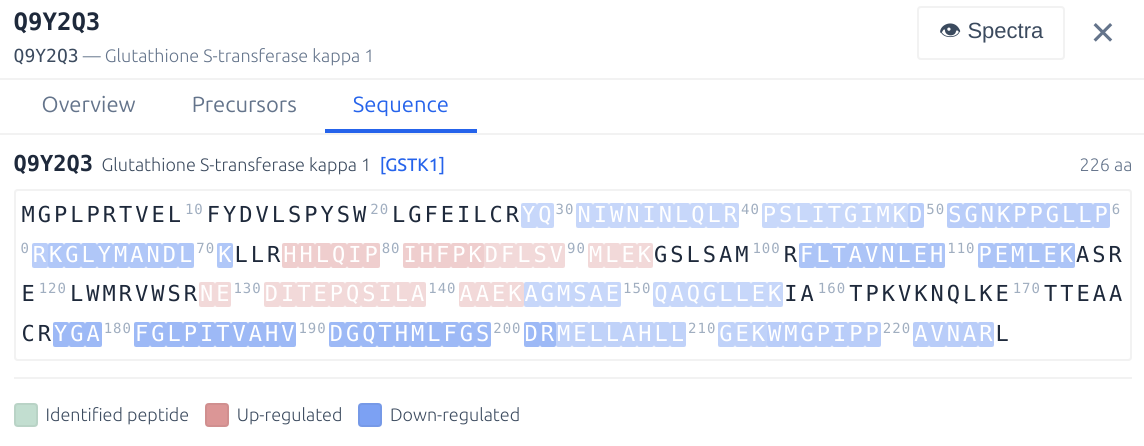
DIA-NN 2.5 enables to gain biological insights from the data in minutes, and confirm the findings by examining how each protein, peptide or PTM site is regulated, with convenient visualisation tools.
Experimental Notes: The Enterprise edition was run with "Knowledge base" enabled • Immunopeptidomics: PXD022950 dataset, recorded on QE HF-X. 136k-library baseline metrics as presented in PMID: 33845167.